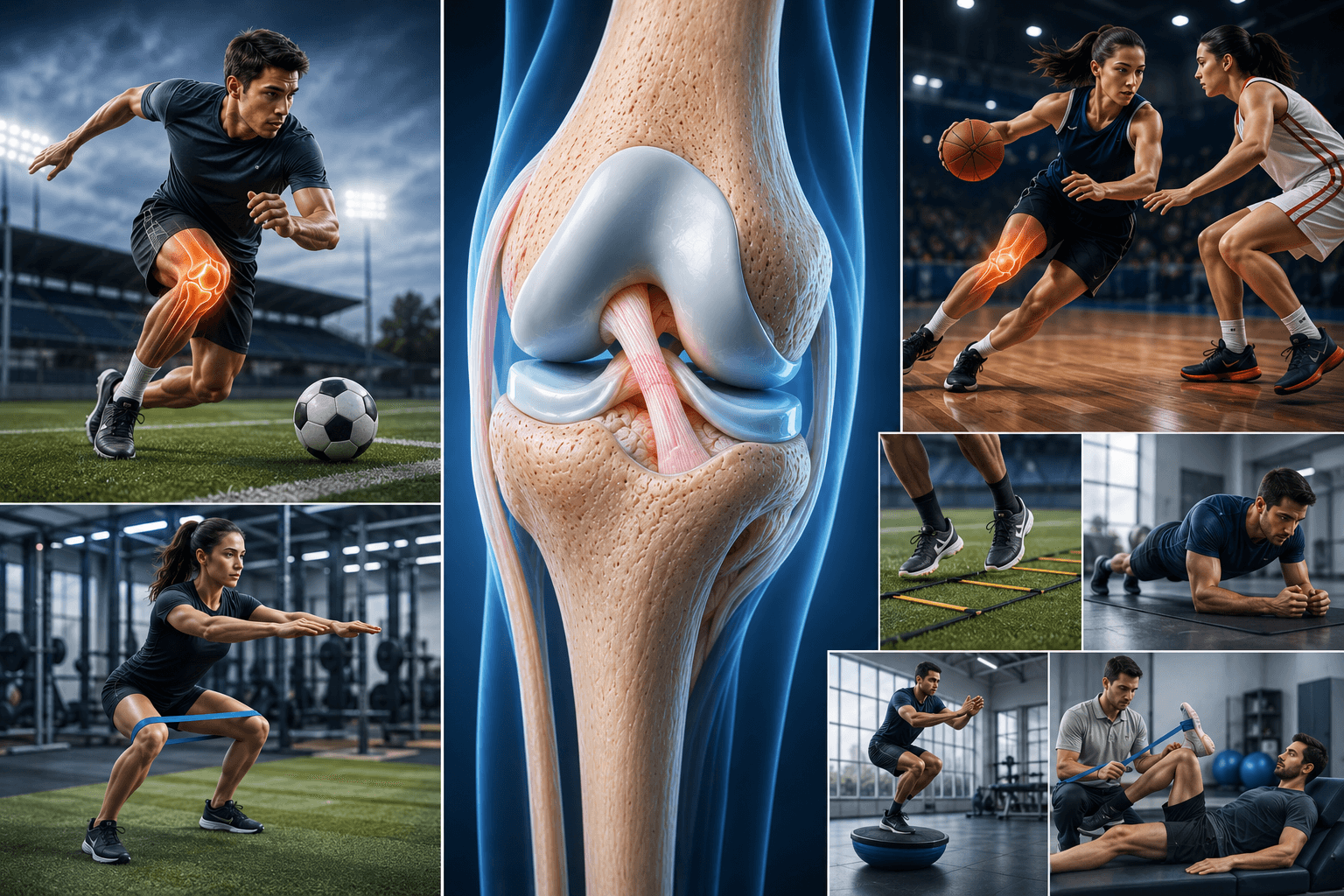
What Happens in an ACL Tear?
The anterior cruciate ligament (ACL) is the primary stabilizing ligament of the knee, preventing the shin bone from sliding too far forward and providing rotational stability. An ACL tear commonly occurs during pivoting, sudden decelerations, or landing awkwardly in sports like cricket, football, badminton, and kabaddi. An estimated 400,000+ ACL injuries occur in India annually. A tear is graded from 1 (mild stretching) to 3 (complete rupture). In active individuals, a Grade 3 tear causes severe joint instability and requires surgical intervention to prevent long-term joint damage.
Can an ACL Tear Heal Without Surgery?
Because the ACL sits inside the joint fluid and has a very limited blood supply, it has almost no self-healing ability. However, surgery is not always mandatory. Non-surgical management consisting of intensive rehabilitation is suitable for older, less active individuals with low functional demands, or those with isolated partial tears and no joint instability. For active individuals and athletes, leaving a completely torn ACL untreated significantly increases the risk of secondary meniscus tears and cartilage damage due to ongoing knee instability.
Arthroscopic ACL Reconstruction
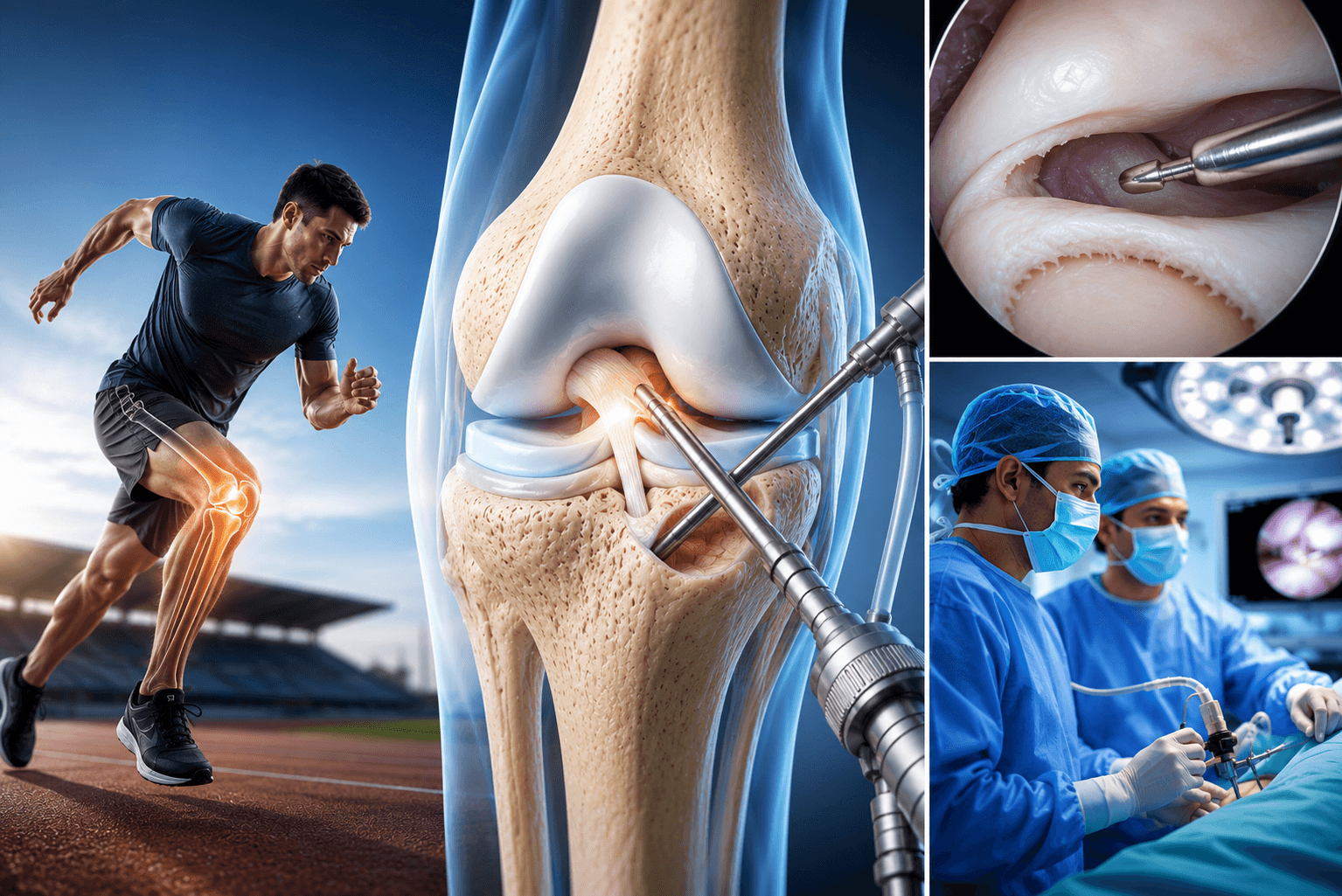
Modern ACL reconstruction is performed minimally invasively using arthroscopy (keyhole surgery) via 2-3 tiny incisions. The torn ligament is replaced with a graft, which is secured in place. Common graft choices include the hamstring tendon (best for most recreational athletes), patellar tendon (BTB, ideal for high-demand pivoting sports), or quadriceps tendon. The surgery achieves a success rate of over 90% in terms of returning athletes to their pre-injury sports, provided they follow a strict, structured rehabilitation program.
Month-by-Month Recovery Timeline
Recovering from ACL surgery is a gradual process that involves both physical and neurological rehabilitation: - Weeks 1-2: Control swelling, activate the quadriceps, and restore full knee extension. - Weeks 3-6: Progress to full weight-bearing, start stationary cycling, and build range of motion. - Months 4-6: Initiate speed, agility, and sport-specific training. - Months 7-9: Complete graft maturation and build psychological confidence. - Months 9+: Return to competitive sports after passing functional and strength symmetry tests (limb symmetry index > 90%).
ACL Surgery Costs in Hyderabad
In 2026, the cost of arthroscopic ACL reconstruction in Hyderabad ranges from ₹60,000 to ₹1,20,000 for standard hamstring grafts, and ₹80,000 to ₹1,50,000 for patellar tendon grafts, depending on the hospital facility and implant hardware used. Health insurance policies generally cover the procedure, provided proper MRI documentation is submitted. Remember that surgery is only 40% of the recovery process—the remaining 60% depends entirely on post-operative rehabilitation and physical therapy.